

The Perfect Storm for India’s Automotive Revolution
India stands at a critical crossroads in May 2026. As global crude oil prices surge past 126 per barrel following escalating geopolitical tensions in the Middle East, the country faces an imminent fuel price crisis that could reshape its transportation landscape forever . With state-owned oil marketing companies (OMCs) absorbing losses of nearly ₹30,000 crore per month, a significant petrol and diesel price hike of ₹4-5 per litre is expected before May 15, 2026—the first major revision in nearly four years .
Paradoxically, this fuel crisis is creating unprecedented momentum for India’s electric vehicle (EV) sector. While global EV markets have slowed due to policy uncertainty, India has emerged as a rare bright spot, with electric passenger vehicle sales surging 83.63% year-on-year in FY26 to nearly 200,000 units . Industry leaders confirm that 20-30% of recent demand spikes are directly attributable to consumer anxiety over fuel price volatility .
This comprehensive analysis explores how rising fuel costs are accelerating India’s electric mobility transition, the challenges that remain, and what this means for consumers, policymakers, and the automotive industry.
1: The Fuel Price Crisis Explained
Why Petrol and Diesel Prices Are Set to Rise
India imports approximately 85-90% of its crude oil requirements, making the economy exceptionally vulnerable to global supply disruptions . The current crisis stems from a perfect storm of geopolitical and market factors:
Global Oil Shock Timeline:
- February 28, 2026: Brent crude trading at 73/barrel (pre-conflict baseline)
- Late April 2026: Brent surges above 126/barrel following US naval blockade of Iran
- Early May 2026: July futures stabilize near 114/barrel but remain elevated
This represents a 72.6% price increase compressed into approximately 60 days—one of only six occasions in market history when Brent’s monthly average has crossed 120 per barrel .
The Government’s Dilemma
The Indian government and OMCs—Indian Oil Corporation, Bharat Petroleum, and Hindustan Petroleum—have been shielding consumers by absorbing up to ₹24 per litre on petrol and ₹30 per litre on diesel . However, this strategy has become fiscally unsustainable.
Policy Option Benefit Risk
Approve retail price hike Restores OMC balance sheets Adds 0.2-0.4% to CPI inflation
Maintain freeze, compensate OMCs Protects consumers short-term Expands fiscal deficit
Freeze without compensation No immediate fiscal impact Deepens OMC financial distress
Source: ET EnergyWorld analysis
The government has already implemented a two-tier pricing approach, adjusting commercial LPG and premium fuel grades while keeping regular retail prices frozen. Commercial LPG has seen cumulative increases exceeding ₹1,300 per cylinder since March 2026 .
Current Fuel Prices Across Major Indian Cities (May 2026)
City Petrol Price (₹/litre) Key Driver
Chandigarh ₹94.30 Lower state VAT structure
Delhi ₹96.72 Central government rates
Mumbai ₹106.31 Higher state taxes
Thiruvananthapuram ₹107.48 Highest state tax imposition
Source: GoodReturns, May 11, 2026
The ₹13+ per litre gap between cheapest and most expensive cities reflects entirely state-level tax policy decisions, meaning any national base price hike will be amplified in high-tax states .
2: The EV Boom—By the Numbers
Record-Breaking Sales Growth
India’s electric vehicle market is experiencing its strongest growth phase yet, directly correlated with fuel price anxiety:
FY26 Electric Passenger Vehicle Sales:
- Total EV PV Sales: 1,99,923 units (up 83.63% from 1,08,873 in FY25)
- Market Share: 4.2% (up from 2.6% in FY25)
- January-April 2026: 79,063 units sold (69.5% YoY growth)
- March 2026: Highest-ever monthly sales with over 23,000 units
Market Leaders Driving the Charge
Manufacturer FY26 EV Sales YoY Growth Market Position
Tata Motors 78,811 units +35.90% Market leader (40% share)
JSW MG Motor 53,089 units +73.67% Strong #2 position
Mahindra & Mahindra 42,721 units +407% Fastest-growing major player
Hyundai 5,885 units +137.59% Expanding lineup
BYD India 5,361 units +54.01% Chinese premium entrant
Kia India 3,738 units +794% New entrant momentum
Sources: Acko Drive , Carlelo
Mahindra’s Remarkable Transformation: The company crossed 50,000 eSUV deliveries in roughly one year, with its EV business reportedly profitable at the EBITDA level . Mahindra’s Managing Director, Nalinikanth Gollagunta, confirmed: “India’s transition to electric mobility is gaining pace, and we are seeing that momentum clearly reflected in our performance” .
The Fuel Price Connection
The correlation between fuel price fears and EV demand is explicit:
“20-30% of the company’s increased demand last month was due to customer concern over the West Asia crisis” — Shailesh Chandra, MD, Tata Motors Passenger Vehicles
“We have seen a 26% rise in customer interest in March” — Anurag Mehrotra, MD, JSW MG Motor India
EVs’ share of new car sales jumped from 3.5% in February 2026 to 5.1% in March 2026—a direct market response to global economic pressures .
3: Why Consumers Are Switching—The Economics of EV Ownership
Total Cost of Ownership (TCO) Advantage
Rising fuel prices fundamentally alter the TCO calculation for Indian consumers:
Cost Factor ICE Vehicle Electric Vehicle
Fuel/Energy Cost per km ₹8-12 (petrol) ₹1.5-2.5 (electricity)
Maintenance (annual) ₹15,000-25,000 ₹5,000-8,000
Running Cost Savings Baseline 60-80% lower
With petrol prices potentially crossing ₹100/litre in major metros after the proposed hike, the economic case for EVs becomes compelling for high-mileage users, particularly in commercial and fleet applications.
Government Incentives Supporting the Transition
India’s policy framework continues to support EV adoption:
- PM e-Drive Scheme: ₹10,900 crore allocation (2024-2026) for EV adoption
- FAME-II Legacy: Preceded PM e-Drive with ₹11,500 crore allocation
- Ethanol Blending: Increased from 1.5% to 20%, reducing petroleum dependence
- Production Linked Incentive (PLI): For advanced chemistry cell battery manufacturing
Infrastructure Expansion
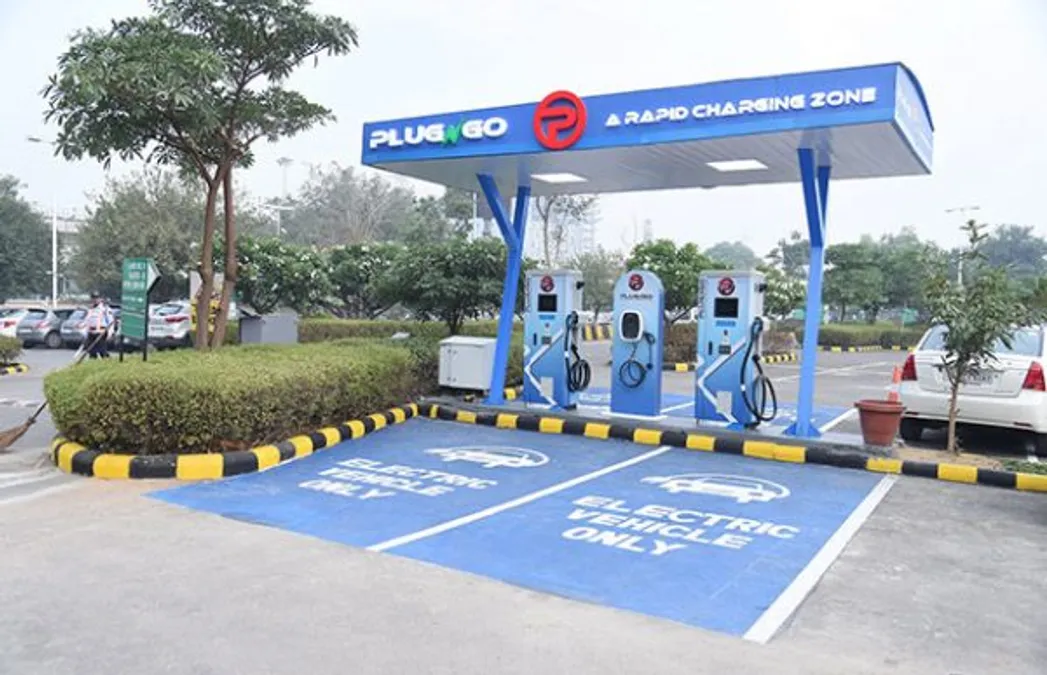
EV Motors India’s PlugNgo rapid charging zone
The charging infrastructure ecosystem is maturing rapidly:
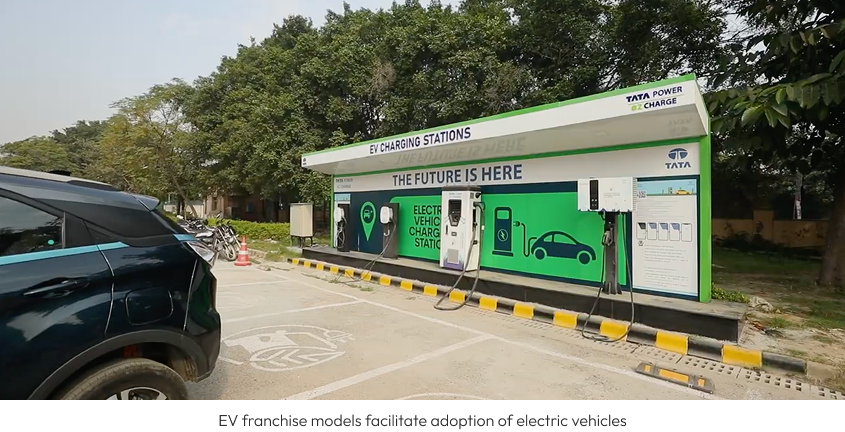
- Tata Power: Expanding “EZ Charge” network across highways and cities
- Charge+ Zone: Rapid charging networks in metro areas
- Battery Swapping: Emerging as a solution for commercial vehicles and two-wheelers
Analysts project India will have nationwide battery swapping networks and ultra-fast charging hubs by 2030, reducing downtime to under 3 minutes per swap .
4: Top Electric Vehicles in India 2026
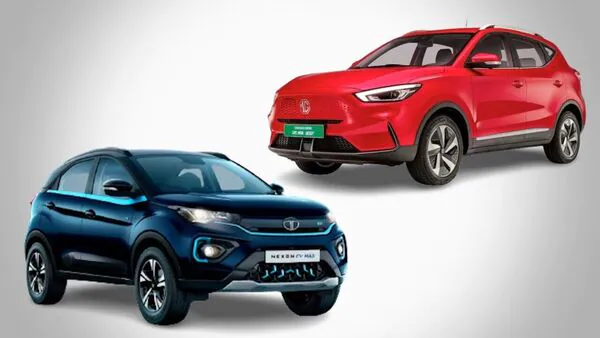
India’s leading electric SUVs: Tata Nexon EV and MG ZS EV
Best Electric Cars for Indian Consumers
Model Range Battery Price Segment Key Feature
Tata Curvv EV 466 km 45-55 kWh Mid-range Coupe-SUV design, panoramic sunroof
Mahindra XEV 9e 500 km 70 kWh Premium Dedicated EV platform, eSUV architecture
JSW MG Windsor 400 km 50 kWh Mid-range 70% of MG’s sales from smaller cities
Tata Nexon EV 465 km 40.5 kWh Entry-mid Market leader, proven reliability
BYD Atto 3 480 km 60.48 kWh Premium Blade Battery technology
Hyundai Ioniq 5 500 km 72.6 kWh Luxury 800V architecture, ultra-fast charging
Source: Clean Fleet Report
New Entrants Shaking Up the Market
- VinFast (Vietnam): VF7 SUV with 485 km range, 349 bhp
- Tesla India: Initial volumes of 342 units recorded in FY26
- Maruti Suzuki e-Vitara: Entry into EV space with Battery-as-a-Service model
5: Challenges and Roadblocks
The 30% by 2030 Target—Reality Check
Despite impressive growth, EVs accounted for just 7.6% of total vehicle sales in 2024, far from the government’s 30% target by 2030 . Adding over 20 percentage points in five years requires overcoming significant structural barriers:
Key Challenges:
- Elevated Upfront Costs: EVs still command a 20-40% premium over ICE counterparts
- Charging Infrastructure Gaps: Uneven distribution, particularly in Tier-2/3 cities and rural areas
- Battery Technology Concerns: Range anxiety, charging time, and battery longevity questions
- Financing Environment: Cautious lending for EVs due to residual value uncertainty
- Grid Reliability: Rural areas face power supply challenges for consistent charging
The Commercial Vehicle Opportunity
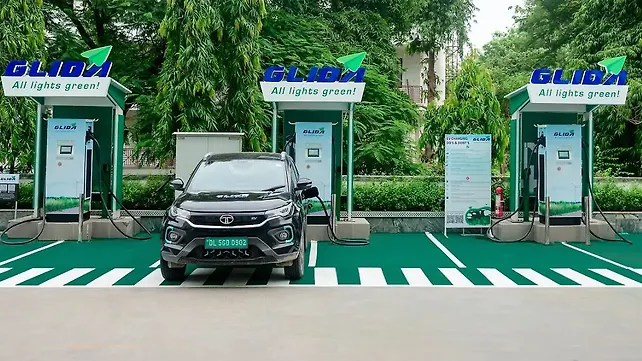
GLIDA charging network with Tata Nexon EV
The three-wheeler and last-mile delivery segment presents India’s most immediate EV transformation opportunity:
- Projected by 2030: 6-7 million electric three-wheelers on Indian roads
- Passenger autos: 75-80% electrification potential by 2030
- Cargo vehicles: 60-65% electrification potential
- E-commerce mandates: Amazon, Flipkart, Zomato, Swiggy targeting 100% EV fleets by 2030
6: What This Means for Different Stakeholders
For Consumers: Should You Buy an EV Now?
Consider an EV if:
- Your daily commute exceeds 50 km (maximizes running cost savings)
- You have access to home charging or reliable workplace/public charging
- You plan to keep the vehicle for 5+ years (TCO advantage compounds)
- You live in a metro or Tier-1 city with expanding infrastructure
Wait if:
- You frequently undertake long intercity drives (>400 km) with limited charging infrastructure
- You cannot install home charging and rely on sparse public networks
- Budget constraints limit you to entry-level ICE vehicles (EV options still limited below ₹8 lakh)
For Investors: Market Opportunities
India’s EV ecosystem offers multi-layered investment themes:
- Automakers: Tata Motors, Mahindra & Mahindra leading domestic transition
- Battery Manufacturers: Exide, Amara Raja, and PLI beneficiaries
- Charging Infrastructure: Tata Power, ChargeZone, and emerging operators
- Component Suppliers: EV-specific parts (motors, power electronics, thermal management)
- Raw Materials: Lithium, cobalt, and rare earth mining/exploration plays
Analysts forecast the Indian EV market will grow annually by 21% to 41% through 2030 .
For Policymakers: Balancing Act
The current crisis highlights the urgency of:
- Accelerating charging infrastructure deployment in Tier-2/3 cities
- Strengthening domestic battery manufacturing to reduce import dependence
- Rationalizing electricity tariffs for EV charging to maintain cost advantage
- Expanding FAME/scheme benefits to commercial and fleet segments
- Addressing grid integration challenges as EV penetration scales
7: Global Context—Why India Is Different
While global EV markets have shown signs of slowing in 2026, India stands apart:
Market 2026 Trend Key Difference from India
United States Policy uncertainty, slowed growth No acute fuel price crisis; political headwinds
China Market maturation, subsidy withdrawal Already high penetration; price wars
Europe Regulatory push but demand softening High baseline penetration; energy crisis moderating
India Accelerating growth Severe fuel price vulnerability; low baseline; strong policy support
Source: Benchmark Mineral Intelligence, EY analysis
India’s unique position—high oil import dependence, rapidly urbanizing population, strong government policy support, and low initial EV penetration—creates conditions for sustained growth even as other markets face headwinds.
FAQs: Fuel Prices and EVs in India
Will petrol and diesel prices definitely increase in May 2026?
A retail hike of ₹4-5 per litre is under active government consideration, with sources indicating implementation before May 15, 2026 . However, the final decision depends on crude price movements and geopolitical developments.
How much can I save by switching to an EV?
For a driver covering 1,500 km/month, annual fuel savings alone can exceed ₹1.2-1.5 lakh compared to a petrol vehicle, with additional maintenance savings of ₹10,000-15,000 annually.
What is the government’s EV target for 2030?
The National Mission on Electric Mobility targets 30% EV share in total vehicle sales by 2030 . Currently at 4.2% for passenger vehicles, significant acceleration is needed.
Are EVs practical for long-distance travel in India?
With ranges now exceeding 450-500 km for premium models and highway charging networks expanding, EVs are becoming viable for intercity travel. However, planning around charging stops remains essential.
Which is the best EV for Indian families in 2026?
The Tata Nexon EV remains the practical choice for most families (₹14-20 lakh range, 465 km range), while the Mahindra XEV 9e offers premium features for larger budgets. The JSW MG Windsor has gained popularity in smaller cities .
Conclusion: An Irreversible Shift
India’s fuel price crisis of 2026 is proving to be the catalyst that electric mobility advocates have long anticipated. With OMCs facing ₹30,000 crore monthly losses and consumers bracing for ₹100+/litre petrol, the economic rationale for EVs has never been stronger .
The data tells a clear story: EV sales surged 83% in FY26, market share doubled, and industry leaders attribute up to 30% of demand spikes directly to fuel price fears . While challenges around infrastructure, upfront costs, and range anxiety persist, the trajectory is unmistakable.
For India, this represents more than an automotive transition—it is a strategic imperative. With 85-90% oil import dependence, every electric vehicle sold reduces vulnerability to global geopolitical shocks, improves urban air quality, and builds domestic manufacturing capability .
The question is no longer whether India will electrify its transportation sector, but how quickly. And with fuel prices set to rise imminently, that acceleration may happen faster than anyone predicted.
Disclaimer: Fuel prices and EV market conditions are subject to rapid change based on global oil markets, government policy, and geopolitical developments. This analysis reflects conditions as of May 11, 2026. Consult authorized dealers for current EV pricing and local fuel rates before making purchase decisions.